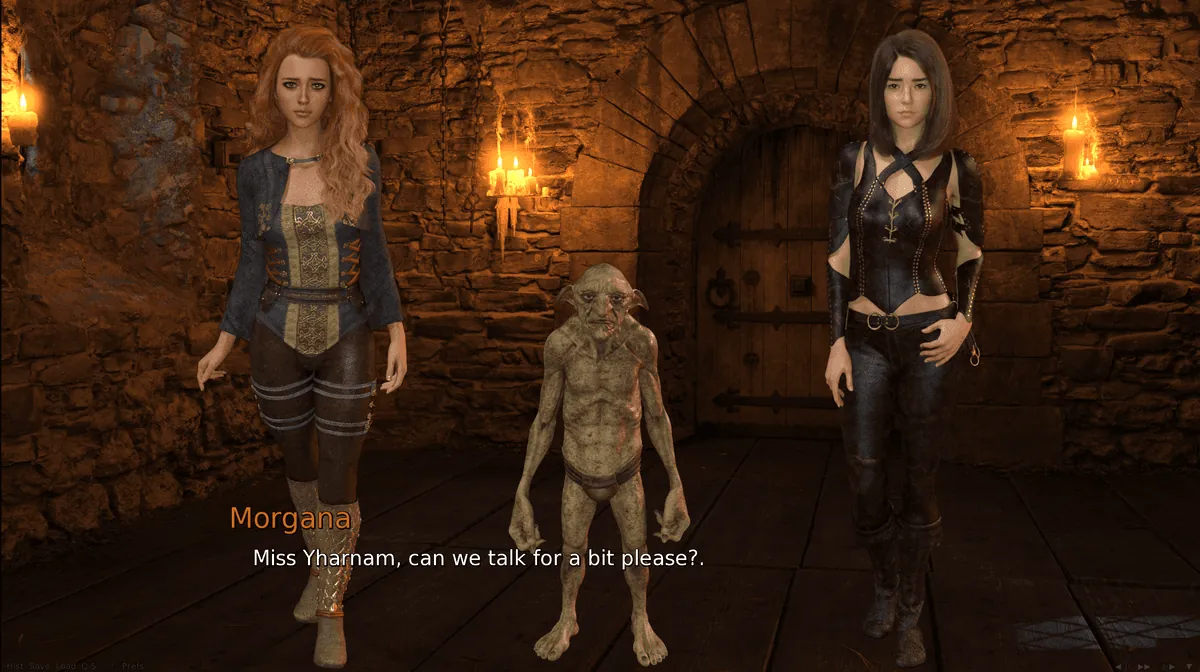
A.O.A. Academy
Play A.O.A. Academy
A.O.A. Academy Screenshots















A.O.A. Academy review
Master every choice, unlock all scenes, and maximize your gameplay experience
A.O.A. Academy stands out as a narrative-driven visual novel that challenges players with meaningful choices and branching storylines. Whether you’re new to the game or looking to optimize your playthrough, understanding the mechanics, character relationships, and decision outcomes is essential. This guide covers everything from basic gameplay mechanics to advanced strategies for unlocking exclusive scenes and maximizing relationship points. Learn how to navigate the game’s complex choice system, manage your stats effectively, and discover all the hidden content that makes A.O.A. Academy a compelling experience.
Understanding A.O.A. Academy Gameplay Mechanics
Ever started a playthrough of A.O.A. Academy, made what you thought was a harmless choice, only to find yourself completely locked out of a character’s route hours later? 🙃 I have. My first time through, I was just role-playing as myself—being a bit of a jokester, skipping on studying, and trying to be everyone’s friend. Imagine my surprise when, midway through the semester, important conversations were grayed out and a key character basically stopped returning my texts. I’d hit an invisible wall because I hadn’t been paying attention to the game’s intricate mechanical heart.
That’s the magic and the challenge of A.O.A. Academy. It’s not just a visual novel; it’s a complex web of interlocking systems that remember every single decision you make. To truly master every choice and unlock all scenes, you need to move beyond simple gut reactions and start thinking like a strategist. This guide will break down the core gameplay mechanics—the A.O.A. Academy choice system, relationship points, character affinity, and stat tracking gameplay—so you can transform from a confused freshman to a legendary campus legend. 🏆
How Choice Systems Shape Your Story
At its core, the A.O.A. Academy choice system is the engine that drives everything. Think of every dialogue option, every action you take, as a pebble tossed into a pond. The ripples extend far beyond the immediate moment, influencing character perceptions, opening or closing future paths, and triggering chains of events you might not see for several in-game weeks.
This isn’t about “good” or “bad” choices. It’s about direction. Early on, you might be asked to decide how to spend your first weekend: helping a classmate study, exploring the city alone, or attending a senior party. This isn’t just flavor text! Choosing to study might boost a hidden “Academic” stat and build relationship points with a diligent character. Choosing the party might increase a “Social” stat and introduce you to an entirely different social circle, initiating a unique branching storyline that a studious player would never encounter.
The golden rule? The game is always tracking. A snarky comment you forget about in Chapter 1 might be brought up bitterly in Chapter 4, altering the tone of a crucial scene. Saving someone from minor embarrassment early on could make them your staunch ally during a major conflict later.
Here’s a personal insight: On my perfectionist playthrough, I discovered that a seemingly minor choice in the prologue—how you react to the headmaster’s speech—actually sets a subtle narrative tone that influences certain dialogue variants throughout the entire game. It doesn’t lock major content, but it changes how some characters initially perceive you. This level of detail is what makes replaying A.O.A. Academy so rewarding. To unlock scenes in A.O.A. Academy, you must embrace the fact that you cannot see everything in one go. Each playthrough is a unique tapestry woven from your decisions.
Managing Relationship Points and Character Affinity
Alright, let’s talk about the social glue of the game: relationship points mechanics and the character affinity system. While they work together, they are different levers you need to pull.
Relationship Points (RP) are the raw, numerical score of your bond with each major character. You gain these through:
* Positive interactions and choosing supportive dialogue.
* Giving preferred gifts (hint: pay attention to what they talk about liking!).
* Successfully completing tasks or favors for them.
* Choosing them in events where you must pick one person to accompany or assist.
RP is often the direct key to how to unlock scenes A.O.A. Academy. Reach a certain RP threshold with a character, and a new one-on-one event will trigger. It’s a fairly straightforward progression meter. 🎯
The character affinity system, however, is more nuanced. Affinity isn’t just about how much a character likes you, but how they view your personality. It’s qualitative, not just quantitative. Are you their “Protective Friend,” their “Ambitious Partner,” or their “Mischievous Accomplice”? This is determined by the type of choices you make around them and in the story at large.
For example, constantly choosing bold, confident, and ambitious actions will shift your affinity with certain characters toward a “Leader” type. Choosing more cunning, secretive, or playful options might build a “Trickster” affinity. Why does this matter? Because major, route-defining scenes and endings are often gated behind specific affinity types, not just a high RP number. You might have max RP with a character, but if your affinity with them is “Brotherly” instead of “Romantic,” you’ll get a heartfelt best-friend ending, not a love confession.
My advice? Focus on one or two characters per playthrough if you want their deepest stories. The relationship points mechanics can be juggled to a degree, but the character affinity system requires consistency in your role-playing to steer the relationship in your desired direction.
Stat Systems and Their Impact on Outcomes
Beyond who you know is who you are in the world of A.O.A. Academy. This is where the deep stat tracking gameplay comes into play. Your character isn’t just a blank slate; they have a set of evolving attributes that silently shape what you can do and see. The main stats you need to monitor are:
- Corruption: Perhaps the most infamous track. This isn’t necessarily “evil,” but rather a measure of your willingness to bend rules, embrace darker impulses, and seek power or pleasure by unconventional means. High Corruption unlocks darker, more intense branching storylines and scenes with characters who have similar tendencies.
- Defense: Your mental and emotional resilience. High Defense helps you resist negative manipulations, maintain your path under pressure, and avoid being swayed in critical story moments. Low Defense might make you more vulnerable to certain event triggers and outcomes.
- Academics: Your performance in school. Affects dialogue options with teachers, can unlock special library events, and is sometimes a prerequisite for helping smarter classmates.
- Social: Your ease and reach within the student body. A high Social stat opens up more party invites, group activities, and helps you gather information from crowds.
- Empathy: Your ability to understand and connect with others’ feelings. Crucial for resolving conflicts peacefully and accessing supportive, heartfelt dialogue options.
These stats act as invisible keys. Many critical choices in the game are locked behind stat thresholds. You might want to stand up to a bully in a certain scene, but if your Defense isn’t high enough, the game won’t even give you that courageous option—you’ll only have passive or fearful responses available. To see the full spectrum of event triggers and outcomes, you must strategically build your stats through daily choices: studying in the library (Academics), working out (Defense), attending parties (Social), etc.
The table below shows a practical example of how different stat thresholds can lead to dramatically different scene variations with a specific character, let’s call her “Elena”:
| Character / Event | Low Stat Threshold Outcome | High Stat Threshold Outcome | Required Stat (Example) |
|---|---|---|---|
| Elena: Library Encounter | You struggle to help her with a problem. The scene ends awkwardly, with a small RP gain. | You expertly solve the problem together. This triggers a follow-up event where she invites you for coffee, unlocking a deeper conversation. | Academics > 7 |
| Elena: Nighttime Walk | She shares a minor worry. You can only offer generic comfort. | She confesses a deep secret. Your high Empathy unlocks a special dialogue option to share your own vulnerability, massively increasing affinity. | Empathy > 8 |
| Elena: Confrontation Scene | You freeze or need others to step in. Your affinity may shift toward “Needs Protection.” | You stand firm and defuse the situation confidently. Your affinity shifts toward “Equal Partner,” unlocking a later romantic scene. | Defense > 6 AND Corruption < 3 |
This stat-based gating is why planning is essential. If you dream of a specific ending, look up what that character values (is it strength? purity? intelligence?) and build your stats toward that image from day one. Your early game choices in how you spend your time are fundamentally building the toolset you’ll have available for late-game content.
Bringing It All Together: Event Triggers and Strategic Play
So, how do the A.O.A. Academy choice system, stats, and relationships combine? Through the event triggers and outcomes system. Events are the scenes that move the plot forward. Some are main story and unavoidable, but most are conditional.
An event trigger is a set of conditions that must be met for a scene to become available. These conditions are almost always a combination of:
1. Story Progress: You must have reached a certain chapter or main story beat.
2. Stat Checks: Your character must meet minimum (or sometimes maximum) stat values.
3. Relationship Status: You must have a certain RP level AND/OR the correct affinity with the involved character(s).
4. Previous Choices: You must have made specific decisions earlier in the game.
For instance, to unlock the famed “Roof Garden Scene” with a character, the trigger might be: Chapter 6, Social > 5, RP with Character X > 50, Affinity with X is “Trusted Friend,” AND you must have chosen to defend them in the Chapter 3 cafeteria argument.
To track this web, I strongly recommend:
* Save Often: Create a new save file at the start of each chapter and before any major decision. This is your safety net.
* Play with Intent: Decide your “route” early. Are you going for a high-Corruption power play? A pure, high-Empathy romance? Stick to choices that align.
* Use the In-Game History: The dialogue log can sometimes hint at shifts in tone or perception.
* Don’t Be Afraid to Specialize: You can’t max all stats in one run. Focus on the 2-3 that matter for your current goals.
By understanding these mechanics, you stop being a passenger in the story and become the pilot. You’re not just watching A.O.A. Academy branching storylines unfold—you’re architecting them from the ground up. 🧠
FAQ: Your Mechanics Questions Answered
Q: I made a choice that lowered my affinity with my favorite character. Is their route ruined?
A: Not necessarily! The character affinity system can often be shifted back with consistent, correct choices. Focus on interactions that align with your desired affinity type (e.g., if you want “Romantic,” choose flattering and exclusively attentive options). Major, late-game affinity locks are harder to reverse, so try to correct course as soon as you can.Q: How do I know which stats are most important for the character I like?
A: Pay close attention to their dialogue and the outcomes of your interactions. If they praise you for being smart, prioritize Academics. If they rely on you for emotional support, Empathy is key. Characters with darker story arcs often respond to high Corruption. Community guides can offer specific stat goals, but in-game observation is your best clue.Q: I missed a clearly important scene! Do I have to restart the whole game?
A: It depends on how far back the trigger was. This is why chapter-based saves are crucial. Often, you only need to go back a few scenes to make a different choice that meets the stat or RP requirement. For long-term route planning, however, a fresh start is sometimes the cleanest option.Q: Can I max out all relationships in one playthrough?
A: Practically, no. Time is a limited resource in-game, and many choices force you to pick between characters. Juggling more than two or three deep relationships is incredibly difficult due to competing stat demands and affinity conflicts. The game is designed for multiple playthroughs.Q: What’s the single best piece of advice for a new player who wants to see most of the content?
A: Embrace the specificity of each run. Don’t try to be a perfect, universally loved hero. Pick a defining trait (Ambitious, Compassionate, Rebellious) and 1-2 core characters, and lean into that role completely. You’ll unlock a far richer, more coherent storyline than if you try to please everyone, and you’ll have a clear plan for what to focus on differently next time. Happy playing!
A.O.A. Academy rewards players who understand its intricate systems and plan their choices strategically. By mastering the relationship point mechanics, managing your stats effectively, and understanding how the choice system branches your narrative, you can unlock the full depth of what the game offers. Each playthrough presents opportunities to explore different character routes and discover alternative scenes based on your decisions. Whether you’re pursuing specific character relationships or aiming for complete content unlock, the strategies outlined in this guide provide a foundation for maximizing your experience. Take time to experiment with different choices, track your progress carefully, and don’t hesitate to reference this guide when you want to optimize your next playthrough for specific outcomes.