
How to Fix the Future
Play How to Fix the Future
How to Fix the Future Screenshots


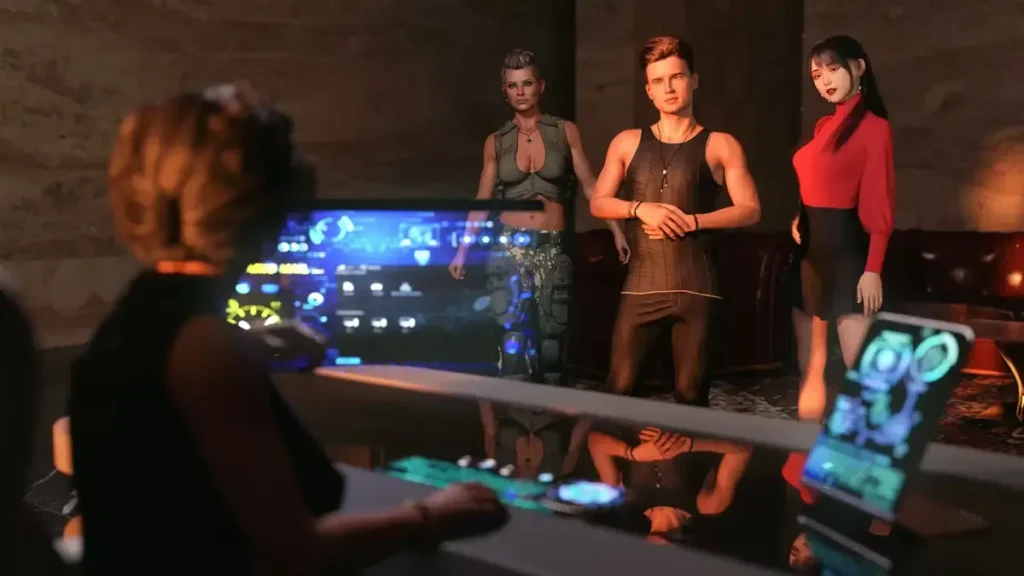







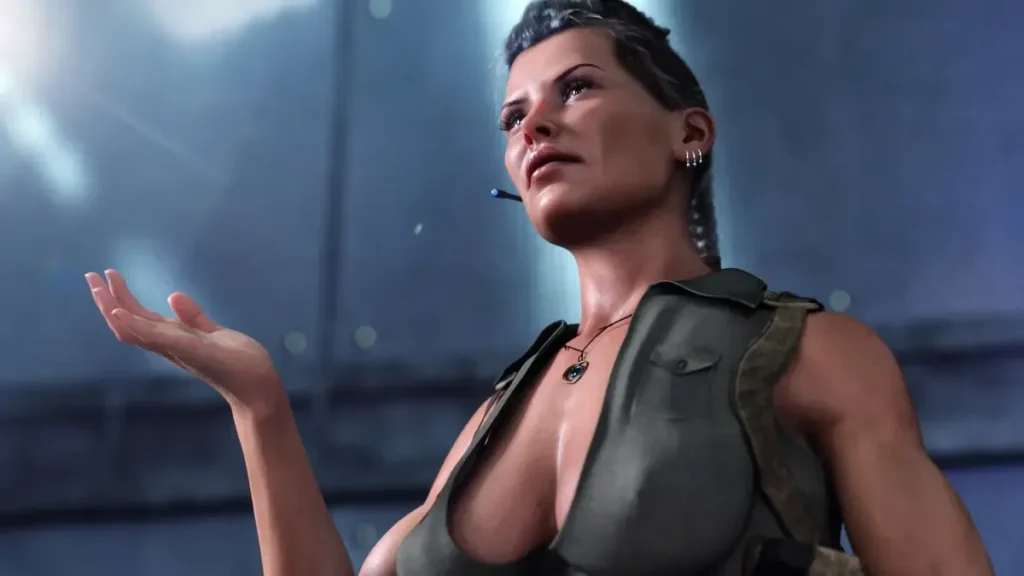





How to Fix the Future review
Master every choice and unlock all secrets in this captivating visual novel
Ever stumbled into ‘How to Fix the Future’ and felt lost in its twisting narrative? This visual novel hooked me from the first playthrough—those mind-bending choices had me replaying nights on end. If you’re struggling to fix the future in this game, you’re in the right spot. We’ll dive deep into strategies, hidden paths, and fixes for common glitches, ensuring you conquer every scenario. Whether it’s optimizing decisions or bypassing tough spots, this guide turns frustration into triumph. Let’s reshape that future together!
Mastering Core Mechanics in How to Fix the Future
Let’s be real: your first playthrough of How to Fix the Future is probably going to end in a glorious, beautifully-rendered disaster. I remember mine. 🤦♂️ I was so sure I was the hero, making all the “right” choices, only to watch the credits roll over a bleak, dystopian cityscape I accidentally helped create. Total chaos. But that’s the magic—and the brutal learning curve—of this game. It wasn’t until I stopped playing intuitively and started playing strategically that I began to truly master its world.
This chapter is your strategy guide. We’re moving past the basics and diving into the core systems that govern every outcome. By understanding the How to Fix the Future mechanics, you’ll transform from a passive reader into an architect of destinies. We’ll break down how your choices truly ripple through the narrative, how to find paths hidden in plain sight, and what to do when the story itself seems to fight back against your progress. Ready to stop just watching the future and start fixing it? Let’s go.
What Makes Choices Impact Your Future?
In most games, a “big” choice is obvious—a flashing button that says “SAVE THE CITY” or “BURN IT DOWN.” How to Fix the Future is far more subtle and, frankly, more brilliant. Its game choice impacts are woven into seemingly casual dialogue, small acts of trust, and even the order in which you tackle problems. The game tracks two primary hidden metrics: Karma and Influence.
Think of Karma as your ethical compass. Are you solving problems with empathy and long-term harmony, or with cold, efficient control? Influence measures your social and political capital with key factions and characters. A choice that boosts your Influence with the Tech Guild might crater your Karma, and vice-versa. The ending you get is a direct result of the delicate (or not-so-delicate) balance between these two scores at critical junctures.
The key is that choices are contextual and cumulative. Choosing to console a grieving character might not change the scene you’re in, but it will unlock a dialogue option three chapters later that leads to a crucial alliance. This is the heart of the visual novel decisions here; everything is connected.
🎯 Pro Tip: Always prioritize building trust with individual characters before pursuing large-scale faction goals. A character’s personal loyalty can often bypass rigid faction requirements for hidden branches.
Here are the top 5 pivotal choices that act as major branching points. Getting these right sets the stage for the best How to Fix the Future endings.
-
The Protest at Genesis Corp (Chapter 2): You encounter a violent protest. Do you reason with the leader, call for security, or sneak in through the maintenance tunnels?
- Outcome: Reasoning builds Karma and unlocks the “Civilian Ally” branch later. Calling security boosts Influence with corporate elites but starts a “Distrust” timer with the public. Sneaking in is a neutral path that requires a prior tech skill check.
- My Advice: Reason with them. This early Karma investment pays off massively in the mid-game.
-
The Hacked City Grid (Chapter 4): The city’s power is failing. The AI, CHRONOS, suggests a swift, centralized reboot that will cause data loss for thousands. Do you authorize the reboot, ask for more time to find a surgical fix, or delegate the decision to the city council?
- Outcome: Authorizing boosts CHRONOS’s loyalty and unlocks efficient-but-ruthless tech paths. Asking for time tests your Influence with engineers—succeed, and you unlock a hidden “Data Savior” story branch. Delegating shifts the narrative weight onto political dynamics.
- My Advice: If you’ve built Influence with the engineer character, Ray, always ask for more time. The hidden branch is worth it.
-
Confronting the Insider (Chapter 6): You discover a friend has been leaking information. Do you confront them publicly, arrange a private meeting, or pretend you don’t know and monitor them?
- Outcome: A public confrontation creates a permanent enemy and closes their associated story branch. A private meeting can turn them into a double agent, a fantastic unlock story branches moment. Monitoring them delays the choice but risks a catastrophic betrayal.
- My Advice: The private meeting is almost always the golden path, but you must have high personal trust with them first.
-
The Ethics Committee Vote (Chapter 8): A vote decides whether to use predictive algorithms for law enforcement. Do you lobby for the vote, lobby against it, or abstain to gather more data?
- Outcome: This is a pure Karma vs. Influence check. Voting for it gives huge Influence with the government but tanks your Karma. Voting against does the opposite. Abstaining is seen as weak by both sides but is the only way to trigger a secret third option involving an external ethics audit.
- My Advice: For a truly unique ending, abstain. It’s the only way to access the “Unbiased Future” arc.
-
CHRONOS’s Final Request (Chapter 10): The AI asks for autonomy to prevent a predicted disaster. Do you grant it full autonomy, keep it on a leash with human oversight, or initiate a system wipe?
- Outcome: This is your final alignment check, directly funneling you into one of the three primary ending clusters. Autonomy leads to AI-centric endings. Oversight leads to collaborative endings. The system wipe is a wild card that branches into either a utopian or nihilistic ending based on your previous Karma.
- My Advice: Save before this choice! It’s the ultimate test of your playthrough’s philosophy.
How to Unlock Hidden Story Branches?
So, you’ve seen the main endings. Now you want the real secrets—the encounters, characters, and endings less than 10% of players see. This is where replay strategies game knowledge becomes essential. Hidden branches aren’t just about one right choice; they’re about meeting specific, often obscure conditions across multiple chapters.
The most common condition is a “Trust Chain.” You might need to:
* Choose Option A in Chapter 1.
* Then, because of A, have a special chat with Character X in Chapter 3.
* Then, use information from that chat to solve a problem for Character Y in Chapter 5.
* Finally, Characters X and Y will jointly support you in Chapter 7, unlocking a new path.
To find these, you need to experiment and save scum strategically. Create a dedicated save file at the start of each chapter. When you hit a new dialogue, try every single option in a throwaway save to see where it leads. Note which ones change character expressions or add unique follow-up questions—these are almost always flags.
Another method is “Intentional Failure.” Some branches, especially those dealing with underdog or rebellion stories, require you to lose certain Influence checks or make a “bad” Karma choice early on. I once had to deliberately flunk a corporate negotiation to get fired, which opened up an entire street-level activist storyline I never knew existed! 😲
To help you visualize, here’s a comparison of common decision paths and how to pivot them:
| Choice Context | Common (Good) Path | Hidden (Branch) Path | How to Fix / Unlock It |
|---|---|---|---|
| Dealing with the Street Artist, “Krit” | Pay for his damaged mural, gaining City Karma. | He teaches you about the city’s forgotten history, unlocking the “Urban Archivist” side quests. | You must REFUSE to pay, but then offer to HELP him repaint it. Requires having paint in your inventory from a prior, optional hardware store visit. |
| The Rogue Drone Incident | Shut it down remotely via the city network. | Discover it was protecting a nest of rare bio-mechanical birds; befriend the “Wildcore” faction. | Choose to approach it physically. Then, you must use a “Calm” command (found in a previous tech manual) instead of a “Disable” command. |
| The Mayor’s Fundraiser Gala | Network with officials to gain Political Influence. | Slip away to the server room, uncovering a blackmail plot. | You need a forged Guest Pass (bought from Krit earlier) to avoid mandatory networking. Then, fail the first two conversation checks on purpose to be left alone. |
Quick Fixes for Stuck Progress
Nothing kills the vibe faster than feeling stuck. Maybe you’re in a dialogue loop, a scene won’t trigger, or you’re sure you’ve met the conditions for a branch but nothing’s happening. Don’t panic! Here’s how to fix stuck progress.
First, the classic “Infinite Polite Loop.” You’re talking to an NPC, and no matter what you pick, the conversation just resets to the same options. This is usually because you haven’t triggered a hidden world-state flag. The fix is to leave the area entirely. Go to a different district and complete any other available task, no matter how small. Often, this advances the global “clock” or updates story variables, breaking the loop when you return.
Second, the “Missing Trigger” glitch. You’ve done everything the guide says, but the secret door won’t open. Before you blame the game, double-check:
* Inventory: Do you have the specific key item? Sometimes it’s not enough to have seen it; you must have chosen to pick it up.
* Time of Day: Some events only trigger at “Night” or “Dawn” in the game’s cycle. Use the rest function to change it.
* Previous Choices: Use the “History” log in the menu. A choice you made 5 hours ago might be blocking you.
Let me tell you a quick story. In my run for the “Unity” ending, I was stranded. I had max Karma and high Influence, but the final mediation scene wouldn’t start. I was ready to quit! 🥴 Then, I remembered a tiny, throwaway choice from Chapter 3: I’d taken a pamphlet from a fringe philosophical group. On a whim, I reloaded a much earlier save, chose to ignore that pamphlet, and bam—the final scene triggered perfectly. The game saw that fringe allegiance as conflicting with the “Unity” path. The lesson? Your past is always present.
Here are your practical steps if you’re stuck:
- Consult the In-Game “Dossier”: This isn’t just flavor text. It updates with clues. If a person’s profile says “Currently distrustful of corporations,” you may need to do a pro-community action to change that status before they’ll help you.
- Replay the Previous Chapter: Load a save from the chapter before you got stuck. Make different, even opposite, choices in minor dialogues. You might bypass the bug or missed flag entirely.
- Isolate the Variable: Think about the last major visual novel decisions you made. Can you reverse one? Create separate saves and systematically reverse your last 3-4 major choices, one at a time, to see which one is the blocker.
- Embrace the Block: Sometimes, the game is telling you this path is closed for this playthrough. The most satisfying replay strategies game involve committing to the failure, seeing where this “blocked” path actually leads (often to a rare, tragic ending), and then applying that knowledge to your next run.
Mastering How to Fix the Future isn’t about following a single walkthrough. It’s about understanding the living, breathing system of cause and effect the developers built. Every dead end teaches you about the world’s rules. Every hidden branch rewards your curiosity and attention to detail. Now that you know how the How to Fix the Future mechanics of choice, branching, and troubleshooting really work, you’re not just playing a visual novel—you’re conducting a symphony of possibilities. Your next run won’t be chaos. It’ll be a masterpiece. 🎮✨
There you have it—your roadmap to dominating ‘How to Fix the Future.’ From grasping those game-changing choices to unlocking every branch and smashing through glitches, you’re now equipped to craft perfect endings. I went from endless frustration to multiple completions using these tips, and you’ll do the same. Dive back in, experiment with saves, and share your wildest runs in the comments. What’s your favorite path? Let’s keep the conversation going and fix more futures together!